 Reading time: 3 mins
What first attracted you to Ofcom’s graduate programme?
...and what were your expectations going into it?
When I was in my second year of university, studying Human, Social and Political Sciences, I came across the 10,000 Able Interns project, now known as The Abl Foundation. As a disabled student with accommodations needed for support with day-to-day studying and working, a foundation that specifically matched people like me with employers who were actively seeking to support and encourage disabled people, was incredible.
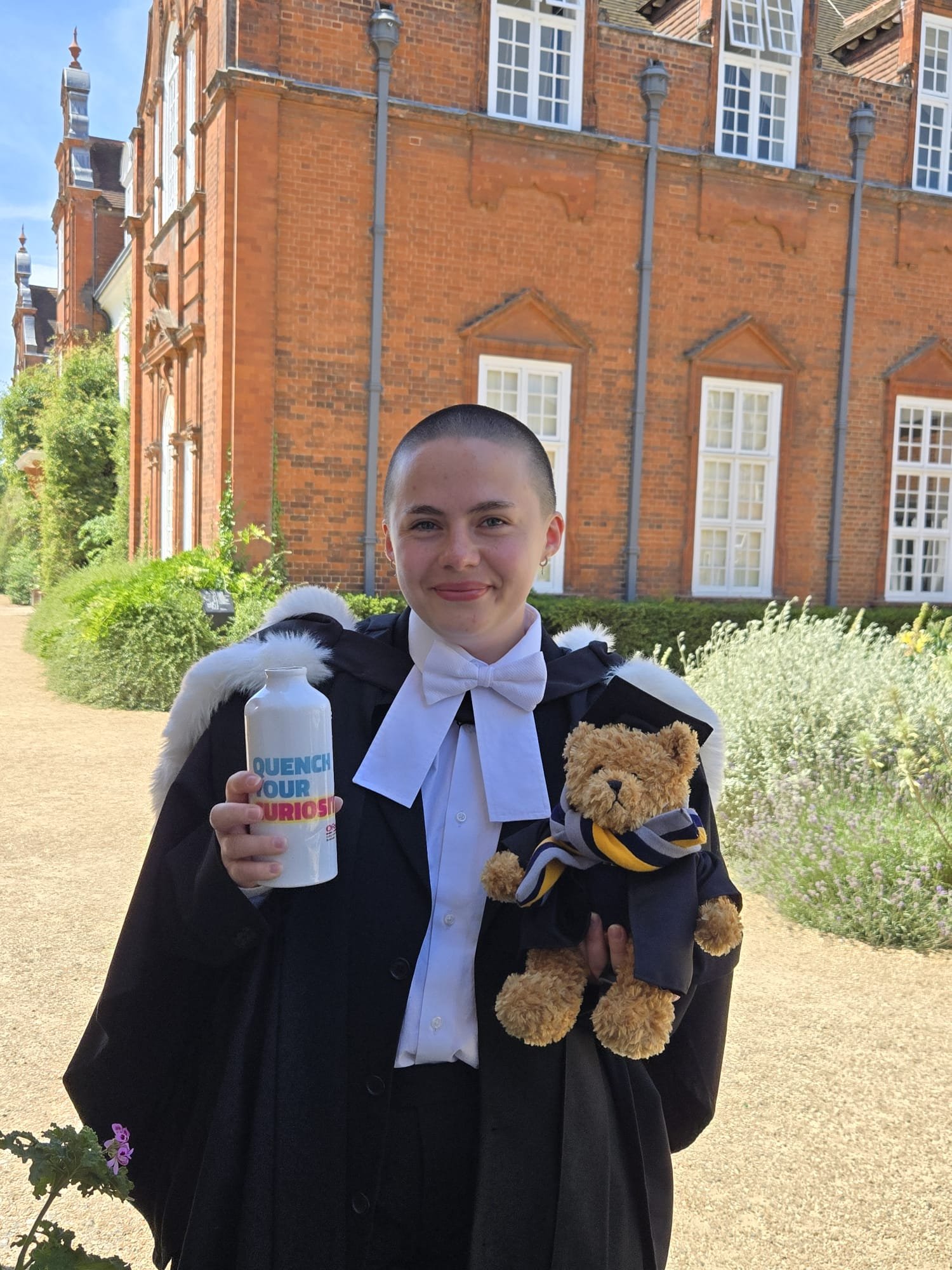
I was matched with Ofcom for an internship in their Online Safety Group that summer and after, I wanted to return as soon as I could.
My support network at Ofcom was vast, and all worked together to give me the best possible intern experience. Learning more about the graduate scheme showed me the sheer variety of opportunities available, including working in-depth in specific policy areas, getting a high-level overview of future strategy and research, and enforcing Ofcom’s policy out in the industry.
Whilst I knew that policy was an area I was interested in, I had no idea what I wanted to do within social policy, and so, I was also attracted to the fact that I could utilise the graduate scheme as a way of learning more about the regulatory space, and any policy areas I was specifically intrigued by.
Has your experience on the programme so far matched what you expected?
Truthfully, my experience so far has exceeded my expectations by far. I am surrounded by a team who have a genuine desire to help me make the most of my graduate scheme, who are attentive to my interests and needs, and trust me to contribute meaningfully to my various projects. So far, I have not only been involved in a wide range of fascinating projects but also, have received really valuable support from my managers and those around me.
I really appreciated how, during our induction to the graduate scheme, Ofcom made every effort to be inclusive, and to arrange any necessary accessibility accommodations. We were also introduced to Ofcom’s colleague networks and their various representatives, one of which was the SOUND network, a collective of colleagues designed to raise awareness and to provide peer-to-peer support for disabled, chronically ill, and neurodivergent colleagues. The Early Careers team also introduced us to Ofcom’s policy on workplace adjustments, and being able to chat to a current graduate about their experience with disability, so early on in our start to the graduate scheme, really cemented the fact that Ofcom has accessibility and inclusion at the forefront of their minds.
Did you need any adjustments during the assessment centre, and how was that process for you?
Both Ofcom and Bright Network gave candidates multiple opportunities to share any necessary adjustments with understanding colleagues who could action the information, whilst sharing with only those necessary. For me, this made the process a lot less daunting.
Though I did not need many adjustments for the assessment centre, I did raise that I sometimes struggle with eye contact, and so, Ofcom informed my interviewers and assessors accordingly. This really took a weight off my shoulders and helped me feel less anxious about my potential body language, so I could focus on performing better.
As someone with a disability, neurodiversity, or long-term condition, did Ofcom’s commitment to diversity and inclusion make a difference in your experience?
In other work environments I have been a part of, accessibility and inclusion has always been a second thought. With Ofcom, I have never had this feeling. I do not think I would be thriving or enjoying my graduate scheme experience with an employer who did not take diversity and inclusion seriously in the way that Ofcom does.
My personal accommodations are prioritised and validated consistently, and my colleagues are more than understanding and willing to support me. Ofcom’s commitment to diversity and inclusion, and their well-developed policies on workplace adjustments and disability support, make me confident in their ability to continue supporting disabled graduates like me. More than anything else, it also makes me excited for my future working here.
What advice would you give to future applicants who are neurodivergent, disabled, or living with a long-term condition and thinking about applying to the graduate programme?
Ofcom is invested in helping you get the most out of this experience. If you need any additional support during the application process, do not hesitate to reach out, because Ofcom genuinely cares about you and your experience. From the moment you apply, to the moment you hopefully take your place on the graduate scheme, and throughout your employment, accessibility and inclusion is central to Ofcom.